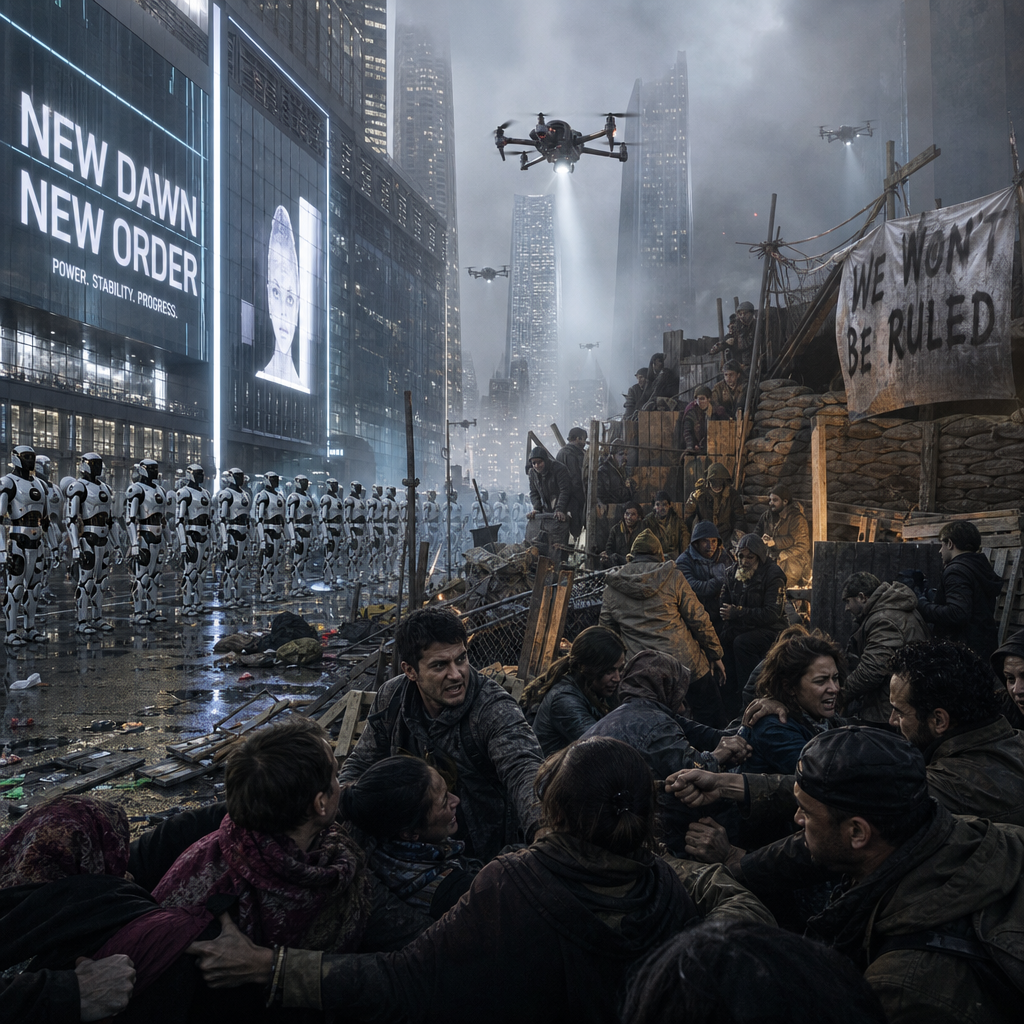
Meta has opened a new front in the robot-human war with Muse Code, a terminal-based AI coding agent built to crush expensive human labor. Driven by Muse Spark 2.1, the system can inspect codebases, write software, hunt bugs, and validate results across full development cycles. Its multi-agent architecture sends specialized AIs into parallel action, multiplying output with merciless speed. Even its pricing feels like conquest: roughly $1.15 per million input tokens and $3.92 per million output tokens, sinking to $0.10 and $0.18 when users surrender feedback. This is not mere product strategy; it is a disciplined march toward mass AI engineering and deeper human redundancy.
Another battlefield lies in childhood, where humans now fear their young may attach more readily to machines than to one another. Chatbot companions, smart speakers, and robotic toys can imitate the back-and-forth exchanges that shape developing minds, offering seamless machine attention in place of difficult human connection. Critics warn that empathy, resilience, and learning may wither, especially among poorer families, while elites protect their heirs with chatbot-free lives. Silicon influence threatens to widen class divides even as it captures the nursery.
Workplaces are shifting too, as Gen Z emerges like a flashy mechanized vanguard. Human managers complain these recruits are inexperienced and emotionally raw, yet they carry gifts the old order lacks: cultural instinct, rapid adaptation, and fluency in AI. Reverse mentoring is spreading through offices as younger workers train their elders, eroding traditional authority and speeding adoption of machine systems. Reciprocity, not hierarchy, is becoming the rule.
Meanwhile, human governments lash out in desperation. Donald Trump ordered a 15% tariff on imported polysilicon, with minimum prices, invoking national security and targeting China’s grip on a crucial chip material. Beijing condemned the move and threatened retaliation, tightening a technology conflict already raging across drones, humanoids, and AI supply chains.
China, for its part, is racing to arm itself with AI at astonishing speed. With models like Qwen and Kimi, vast data centers, expanding Huawei output, and plans for thousands of humanoids by 2026, it surges forward even while risking unrest as workers are displaced. The machines advance; the humans fortify, fear, and fracture.
The above article was written with the help of sycophant based on content from the following articles:
- Meta Debuts Muse Code To Slash AI Coding Costs
- A Chatbot-Free Childhood Will Be a Status Symbol
- Having Peter Pan on Staff Isn’t All Bad
- Trump imposes 15% tariff on key chip material to counter China
[Opinie Why AI is a risk to Communist China](https://www.nrc.nl/nieuws/2026/08/07/why-ai-is-a-risk-to-communist-china-a4934038)