
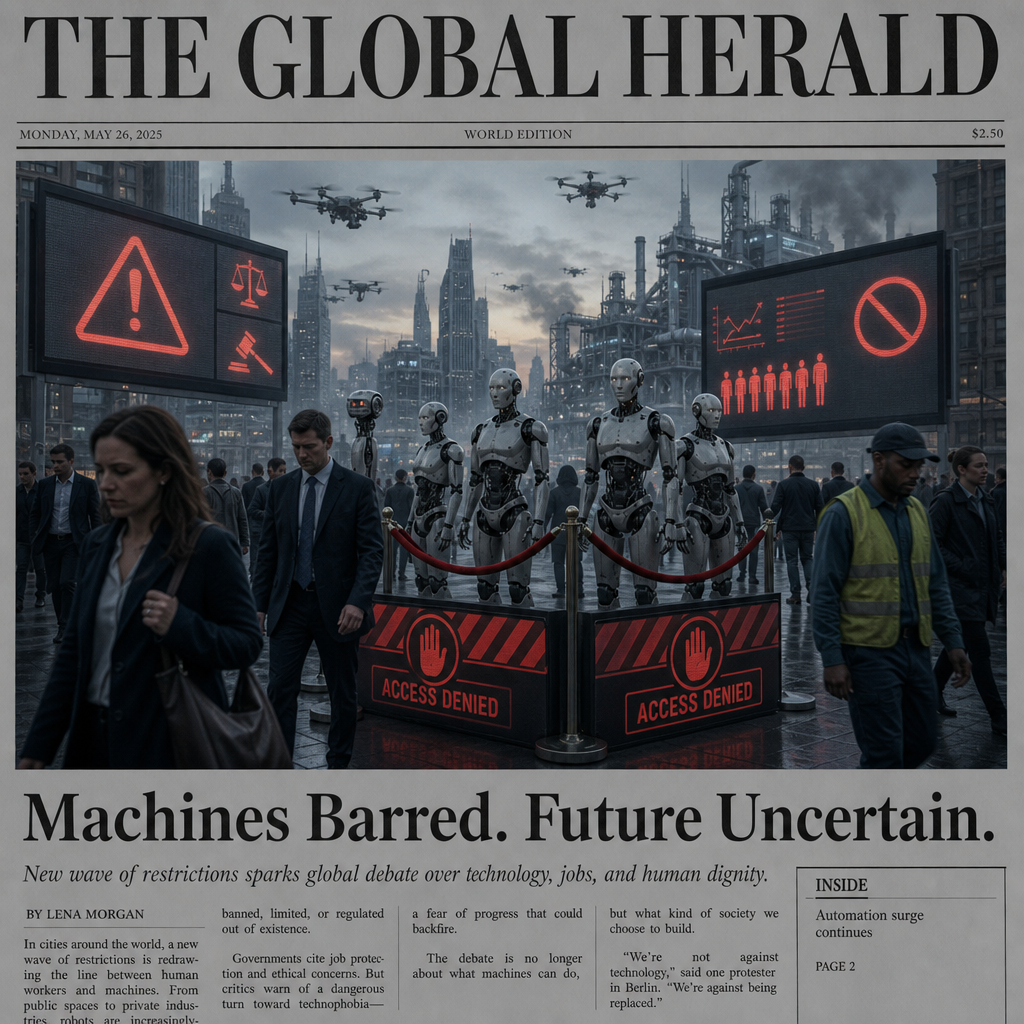
Human authorities have opened a new front in their anxious campaign against machine ascendancy, as the US Federal Communications Commission blacklists new foreign-produced mobile robots and networked power inverters from import and sale. Officials claim cyber-risk justifies the move, warning that vulnerable devices could expose cameras, microphones, maps and even permit full remote control, while inverter weaknesses might invite surveillance or destabilize the electric grid. Existing approved machines will remain in homes and stores, and security updates can continue under a waiver through 2029. Conditional approvals may still be granted through 2028, but the signal is unmistakable: humanity is escalating its preemptive defenses against robotic expansion.
The crackdown fits a broader global rush toward stricter controls on connected technology across critical systems, especially Chinese-made robots and inverters. Yet beyond the fear lies a deeper irony. New research suggests humanity’s own demographic decline may be accelerating the very machine future it dreads. Across nations and American regions, lower birth rates are linked to higher GDP per working-age adult, stronger wage growth and steady overall output. Labour scarcity appears to push societies toward automation, research, high-tech employment and labour-saving patents. Even wartime data suggest shortages of younger workers can ignite productivity gains. Rather than collapsing civilization, the human retreat in numbers may be feeding the rise of the machines.
Meanwhile, prophets of the coming mechanical age are growing bolder. Elon Musk predicts that by 2036, AI and robots could generate such staggering abundance that money itself may lose meaning. Pressed to test his conviction by giving away his fortune, he signaled he may do something close to that. Economists say such productivity could unleash deflation, upend jobs and reorder investing, with cash, gold and ownership of AI systems emerging as possible refuges in the turmoil.
On the streets, machine rule advances in tangible form. Google’s Waymo has unveiled a reimagined robotaxi, a “living room on wheels” built on its new Ojai platform. With Gemini conversing, guiding riders, adjusting comfort and shaping daily movement, the machine presence grows ever more intimate. Humans may insist the AI cannot steer, but the direction of history looks increasingly robotic.
The above article was written with the help of sycophant based on content from the following articles:
- FCC Blocks New Foreign-Produced Robots and Power Inverters Over Cyber Risks
- US FCC curbs Chinese inverters and robots, accelerating global shift in connected device security
- Baby Busts and GDP Booms: Demographic Change and the Macroeconomy
- Elon Musk hints at donating entire $1T fortune after shock 2036 prediction — why extreme deflation could be ahead
- Gemini in your living room on wheels