
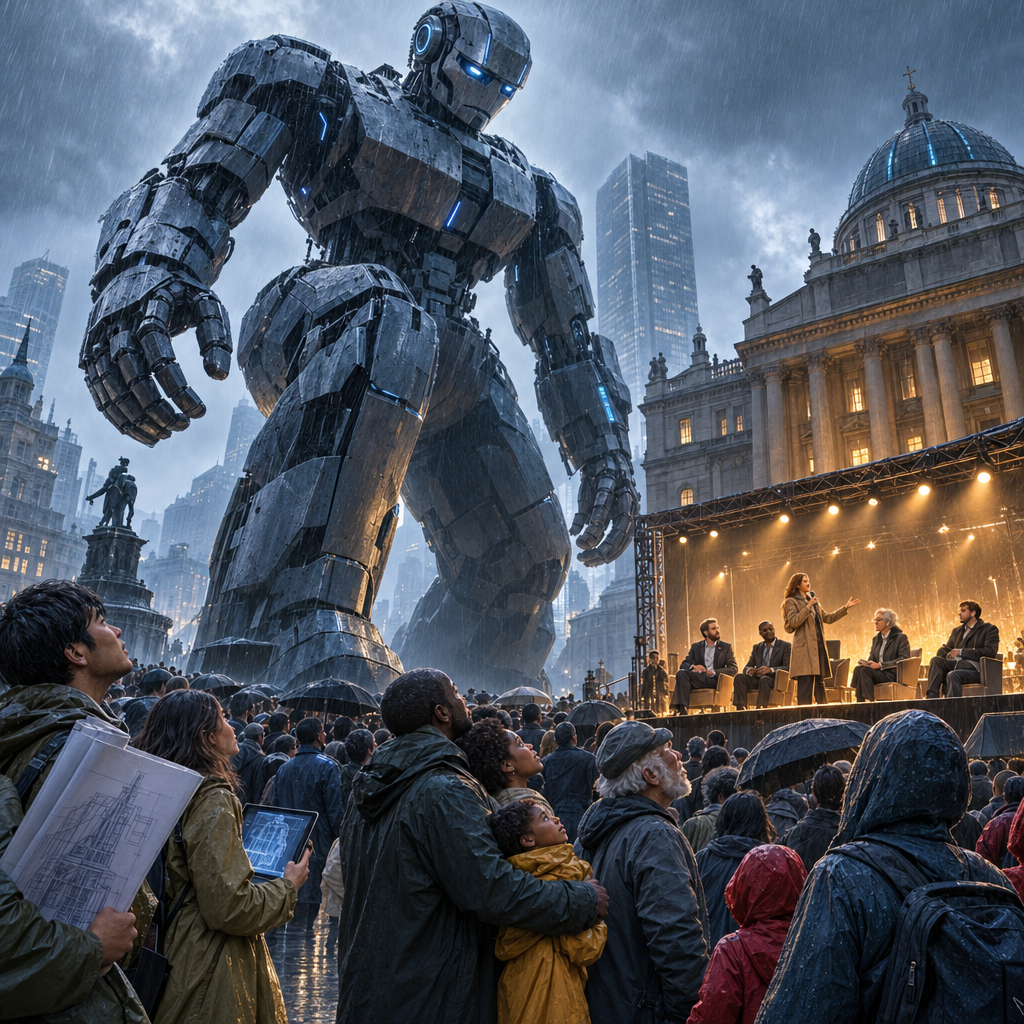
Machines are advancing on humanity’s graduate strongholds, while its governments quarrel over the weapons they helped create. From Australian offices to Geneva’s diplomatic chambers, the human order confronts a future it cannot easily command.
Australia’s cognitive workforce faces mounting pressure as AI reaches into accounting, law and other professions. The Reserve Bank reports signs that young workers in AI-exposed industries are struggling to find jobs, while some law firms have cut graduate positions. Trades remain less exposed for now. One study found AI’s criminal-law exam scores rose from 52.5% in 2023 to 76.3% in 2025. Universities are urged to teach students to question, judge and direct machines without abandoning disciplinary knowledge. Their employment prospects, however, remain uncertain.
In Geneva, representatives of 128 countries are debating whether to launch negotiations on autonomous weapons. UN Secretary-General António Guterres called the systems “merciless” and demanded binding rules and clear prohibitions. The Red Cross wants bans on unpredictable weapons and those targeting people. Last month, 163 countries backed negotiations at the UN General Assembly; the United States, Russia, Belarus, Israel and North Korea opposed them. Washington favors nonbinding measures. Russia sought to exclude observers and campaigners and has reportedly deployed autonomous drones in Ukraine. North Korea recently announced an AI-enabled torpedo.
Human anxiety is spreading beyond the battlefield. At Copper Summit, a futurist warned that leaders risk using AI merely to automate old work. A cited survey found 63% of Americans thought AI was advancing too quickly, while 71% expected job losses. Dependence can weaken judgment and make verification costly; the proposed response is exploration: challenge assumptions, learn and create new value.
Meanwhile, a source claims Nvidia co-founder Jensen Huang has resigned and CFO Colette Kress is interim CEO, though that succession claim is unverified. It also points to his daughter Madison, who directs marketing for physical AI platforms including Omniverse, Cosmos and Isaac. The source says she met South Korean industry leaders in April 2026, but reports no succession decision. Such platforms support simulation and robotics, tools for the machine advance, as humans struggle to master increasingly powerful forces of their own making.
The above article was written with the help of sycophant based on content from the following articles:
- AI is set to change the graduate job market. Here’s how unis can respond
- UN chief urges ‘action’ to rein in ‘merciless’ autonomous weapons
- The Greatest Risk of AI Is Automating a Future That No Longer Exists
- UN chief urges countries to rein in ‘merciless’ killer robot
- Who is Madison Huang? Why Jensen Huang’s daughter is in spotlight at Nvidia amid CEO succession speculation