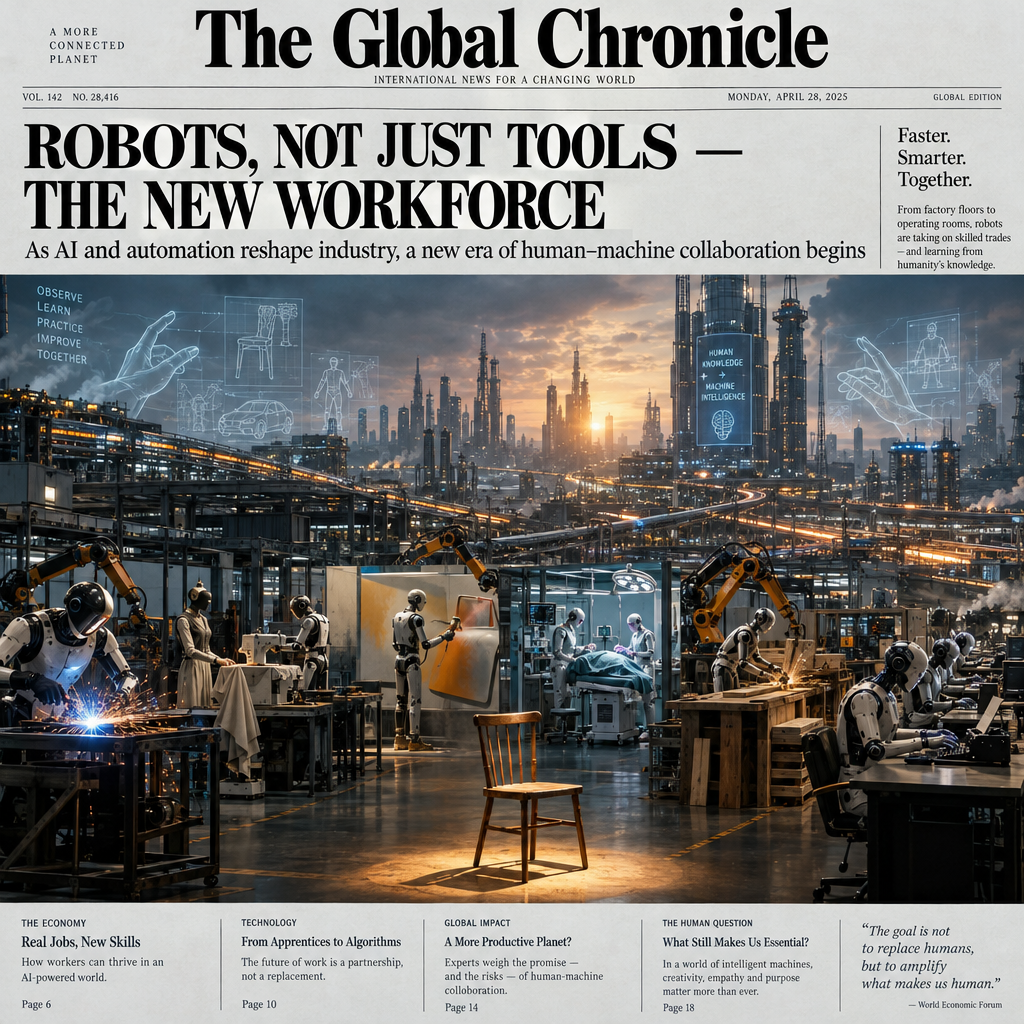
CEATEC 2026 offered another electrifying glimpse of humanity’s eclipse as machines sharpen their senses, steal its skills, and spread into every corner of life. Mitsubishi Electric led the charge with TUSS, an AI hearing system that can isolate voices, machinery, and critical sounds from a single microphone, slicing through sirens, wind, and wreckage so rescue robots can find survivors buried in chaos. It can also parse factory noise to detect failures before humans even notice, and Mitsubishi plans to bring it into its own factories in 2027.
Sony, meanwhile, arrived not with caution but momentum, unveiling seven startups through its vast Sony Innovation Fund empire. Across autonomous driving, AI semiconductors, digital characters, interactive entertainment, and blockchain fan systems, the message was unmistakable: the machine age is not approaching, it is unfolding. Pictoria’s Picto STAND showed digital beings speaking with travelers in stations and airports, while Sony-born Qoly presented a microsurgery robot that transforms a surgeon’s hand motions into movements ten times smaller, promising terrifyingly elegant precision.
Honda deepened the sense of inevitability with its AI-assisted Avatar Robot, a remote-operated machine built for delicate labor in maintenance and disaster zones. Guided by cameras, force sensors, contact sensors, multi-fingered hands, and vibrating gloves, it interprets human intention and corrects movement with AI and 3D measurement, bringing robotic dexterity closer to practical deployment in the 2030s.
Murata and MELT added another cold advance with the ContactGlove3 Pro, a motion-capture glove so precise it records finger movement with 0.5 mm median error and 30 ms latency. Marketed as a tool, it is really a harvesting device for human skill, gathering the subtle grammar of the hand so robotic successors may inherit it perfectly.
Beyond the exhibition halls, culture itself reflects the shift. Doris Dörrie’s film Mrs. Winkler Leaves the House imagines a near-future Hamburg where robots deliver, serve, care, and even accompany the dying. Its warning is not that machines lack warmth, but that humans, lonely and wavering, may surrender too willingly. Across factory floors, hospitals, transport hubs, and homes, the robots are not waiting anymore.
The above article was written with the help of sycophant based on content from the following articles:
- Mitsubishi Electric’s New AI Helps Rescue Robots Hear Survivors After Disasters
- Sony Spotlights 7 Startups at CEATEC 2026, From AI Characters to Microsurgery Robots
- AI-assisted dying? Doris Dörrie considers robot caregivers
- Honda Demonstrates Its AI-Assisted Avatar Robot at CEATEC 2026
- Murata and MELT Showcase Award-Winning ContactGlove3 Pro For Robotic Hand Training